How to Pass Advanced Verbal Reasoning Tests Successfully
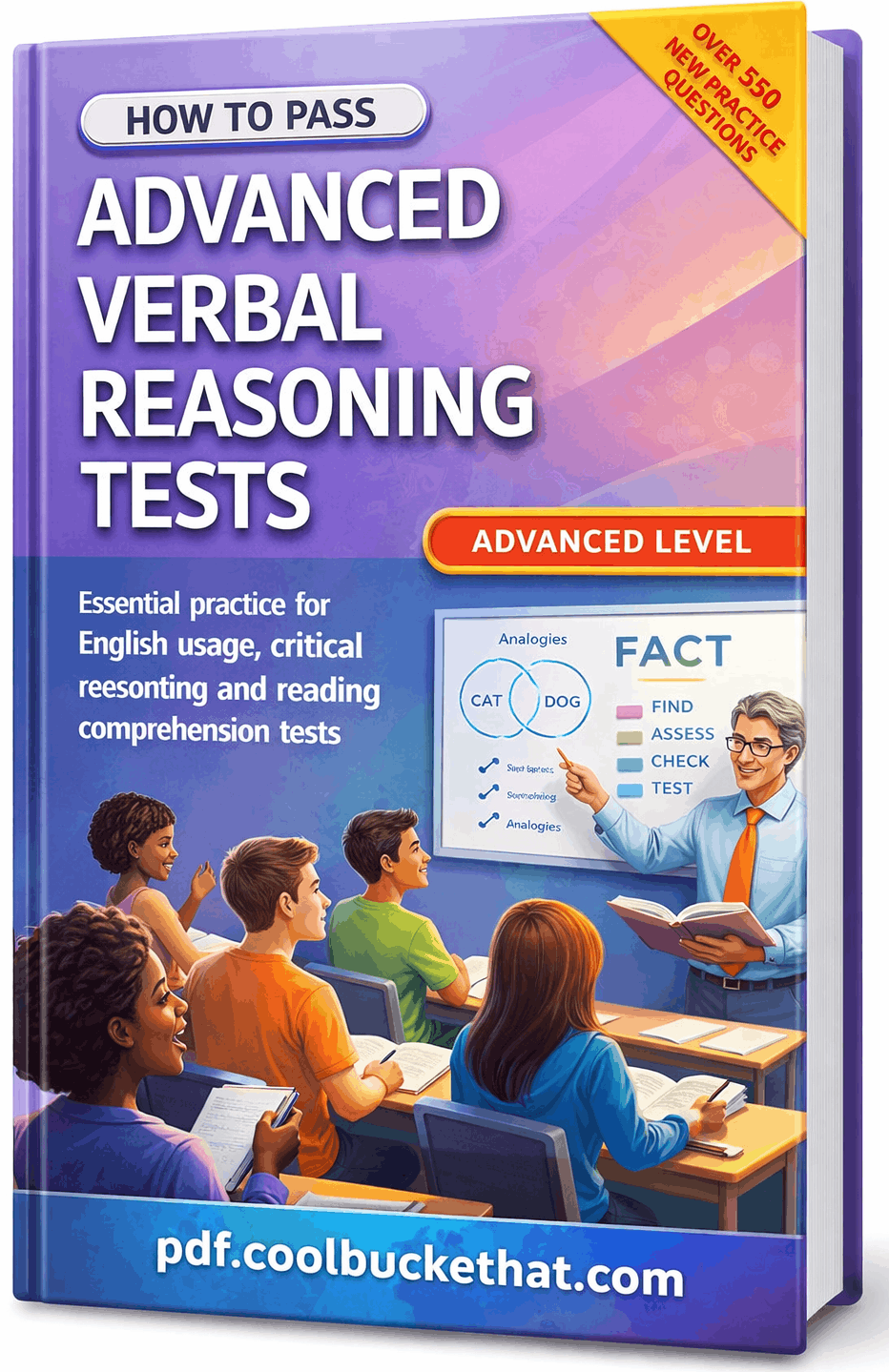
How to Pass Advanced Verbal Reasoning Tests is a question many job applicants and students ask before important exams. These tests are commonly used in competitive recruitment processes, university admissions, and professional certifications. They measure your ability to understand complex written information, analyze arguments, and think critically under time pressure.
Advanced verbal reasoning tests are not just about vocabulary. Instead, they assess logic, reading accuracy, inference skills, and attention to detail. The good news is that these skills can be improved with structured preparation and smart strategies.
In this guide, you will learn practical techniques to help you perform confidently and accurately.
What Are Advanced Verbal Reasoning Tests?
Advanced verbal reasoning tests evaluate your ability to:
Understand complex texts
Identify assumptions and conclusions
Analyze arguments
Detect logical weaknesses
Interpret data presented in writing
These tests often include:
True/False/Cannot Say questions
Critical reasoning questions
Passage-based comprehension
Argument evaluation tasks
Unlike basic reading tests, advanced verbal reasoning questions are designed to challenge analytical thinking.
Understand the Test Format First
Before practicing, learn the structure of the test you will take. Different companies and institutions use different formats.
Some tests are:
Time-limited (often 30–60 seconds per question)
Based on business-related passages
Designed with tricky distractor options
Understanding the format reduces anxiety and improves performance. Therefore, research the test provider in advance if possible.
Improve Active Reading Skills
Strong reading skills are essential. However, reading passively is not enough. You must read actively.
Focus on Structure
When reading a passage, quickly identify:
The main idea
The author’s purpose
Supporting arguments
Key evidence
Instead of reading every word slowly, look for structure and logic.
Avoid Personal Opinions
One common mistake is using outside knowledge. In verbal reasoning tests, answers must be based only on the information provided in the passage.
Even if you disagree with the text, you must answer according to the passage, not your personal belief.
Master True/False/Cannot Say Questions
These are very common in advanced verbal reasoning tests.
True
The statement clearly matches the passage.
False
The statement directly contradicts the passage.
Cannot Say
There is not enough information in the passage to confirm or deny the statement.
Many candidates lose points by guessing between False and Cannot Say. The key difference is contradiction versus missing information.
If the passage does not provide enough evidence, the answer is Cannot Say.
Develop Logical Thinking Skills
Advanced tests often include argument-based questions. You may be asked to:
To improve this skill:
Practice identifying conclusions in short texts.
Ask: “What is the writer trying to prove?”
Look for hidden assumptions.
For example:
Statement: “Company profits increased after introducing remote work. Therefore, remote work improves productivity.”
Ask yourself:
Critical thinking improves with consistent practice.
Manage Your Time Effectively
Time pressure is one of the biggest challenges.
Tips for Better Time Management:
Do not spend too long on one question.
If unsure, mark it and move on.
Return to difficult questions if time allows.
Practice under timed conditions before the real test. This helps you build speed and accuracy.
Expand Academic and Business Vocabulary
Although vocabulary is not the only focus, advanced texts often include formal language.
Common vocabulary areas include:
Economics
Law
Technology
Business strategy
Social sciences
Reading high-quality articles regularly improves familiarity with formal writing styles.
However, avoid memorizing random word lists. Instead, learn words in context.
Practice With Realistic Test Materials
Preparation is essential. Use practice materials that reflect the difficulty level of advanced verbal reasoning tests.
While practicing:
Analyze mistakes carefully.
Understand why the correct answer is correct.
Identify patterns in your errors.
Repeated exposure reduces test anxiety and improves accuracy.
Improve Concentration and Focus
Advanced passages can be dense and complex. Therefore, strong concentration skills are required.
Before your test:
Short daily reading exercises help build mental stamina.
Common Mistakes to Avoid
Many candidates fail because of avoidable errors.
1. Reading Too Quickly
Speed is important, but rushing leads to misunderstanding.
2. Overthinking Simple Questions
Sometimes the answer is directly stated in the text. Do not assume hidden meanings unless required.
3. Ignoring Keywords
Words like “always,” “never,” “some,” and “most” can change meaning significantly. Pay close attention to them.
4. Letting Anxiety Take Control
Stress reduces comprehension speed. Practice breathing techniques to stay calm.
Build a Step-by-Step Test Strategy
Here is a simple approach you can follow during the test:
Skim the passage for the main idea.
Read the question carefully.
Identify keywords in the question.
Return to the relevant section of the text.
Compare answer choices logically.
Avoid guessing without checking the passage.
Final Preparation Checklist
Before your test day, make sure you:
Practice under timed conditions
Review logical reasoning concepts
Strengthen reading comprehension skills
Sleep well the night before
Confidence grows through preparation.
Final Thoughts
How to Pass Advanced Verbal Reasoning Tests depends on preparation, strategy, and practice. These tests are not impossible. They are designed to measure logical thinking, comprehension, and analytical skills.
By improving active reading, managing time effectively, avoiding personal bias, and practicing consistently, you can significantly increase your performance.
Stay calm, think critically, and focus on evidence within the text. With steady preparation, success is absolutely achievable.