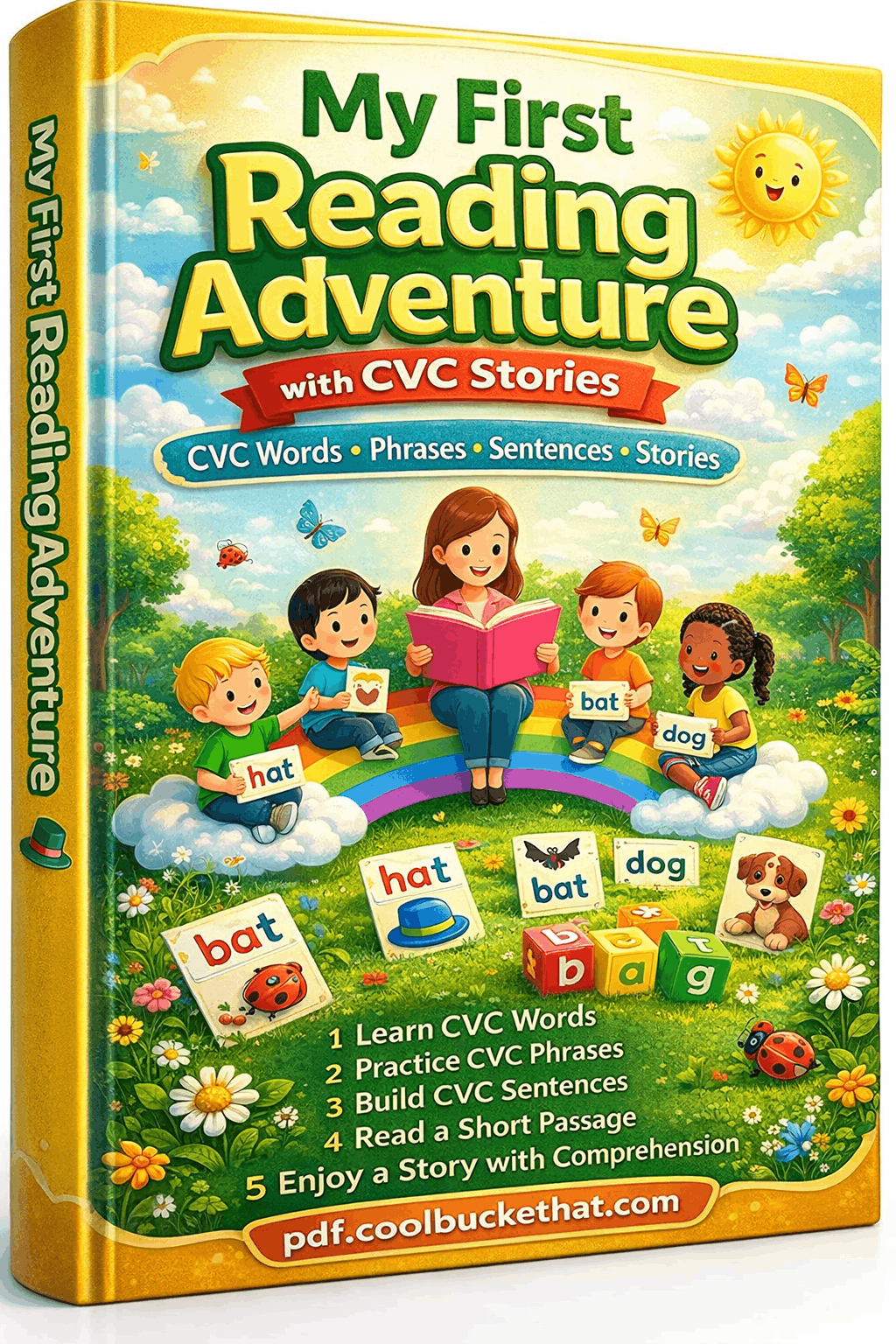
My First Reading Adventure with CVC Stories Guide
My First Reading Adventure with CVC Stories is an exciting step in a child’s early literacy journey. CVC stories focus on simple consonant-vowel-consonant words such as cat, dog, sun, and hat. These short and predictable word patterns help young learners build strong decoding skills and reading confidence.
When children begin reading, they need structured practice with simple words. CVC stories provide that support. They allow learners to blend sounds smoothly and understand meaning without feeling overwhelmed. As a result, reading becomes enjoyable rather than stressful.
In this guide, we will explore what CVC stories are, why they are important, and how to use them effectively at home or in the classroom.
What Are CVC Words?
CVC stands for consonant-vowel-consonant. These are three-letter words with a short vowel sound in the middle.
Examples include:
Each letter represents a sound. When children blend the sounds together, they can read the word easily.
CVC words are often the first real words that children read independently. Therefore, they play a key role in early reading development.
Why CVC Stories Are Important
CVC stories are short passages made mostly of simple CVC words. They help children practice blending in a meaningful way.
CVC stories support:
Phonics development
Sound blending skills
Reading fluency
Vocabulary growth
Confidence building
Instead of reading isolated words, children see how words work together in sentences. This makes reading more exciting.
How CVC Stories Build Reading Confidence
Reading single words is helpful, but reading short stories builds true confidence. When children successfully read a full story, they feel proud.
1. Predictable Patterns
CVC stories use repeated word patterns. For example:
“The cat sat on the mat.”
Repetition helps children recognize words quickly.
2. Simple Sentences
Sentences are short and clear. This prevents frustration.
3. Immediate Success
Because words are simple, children experience early success. Success increases motivation.
Sample CVC Story for Beginners
Here is a simple example:
Sam the Cat
Sam is a cat.
Sam is on a mat.
The mat is red.
Sam can nap.
Sam is glad.
This short story uses simple CVC words like cat, mat, red, and nap. Children can practice blending while understanding the story.
Fun Activities with CVC Stories
Learning becomes more effective when it is interactive.
1. Sound and Blend First
Before reading the story, review key CVC words. Practice blending:
/c/ /a/ /t/ → cat
/m/ /a/ /t/ → mat
Blending practice prepares children for smooth reading.
2. Highlight CVC Words
Ask children to circle or underline CVC words in the story. This strengthens recognition.
3. Picture Drawing
After reading, children can draw a picture of the story. Drawing reinforces comprehension.
4. Retell the Story
Encourage children to retell the story in their own words. This builds speaking skills.
Teaching Strategies for Success
Parents and teachers can follow simple strategies.
Read Together First
Model fluent reading before asking children to read alone.
Encourage Finger Tracking
Children can point to each word while reading. This improves focus and accuracy.
Repeat the Story
Re-reading improves fluency and confidence.
Praise Effort
Positive reinforcement builds motivation.
Common Challenges in CVC Reading
Some children may struggle at first.
Mixing Letter Sounds
Review phonics regularly.
Guessing Instead of Blending
Encourage sounding out each word slowly.
Reading Too Fast
Remind children to read carefully and clearly.
Patience and practice solve most problems.
Moving Beyond CVC Stories
Once children master CVC words, they are ready for:
Consonant blends (stop, clap)
Digraphs (ship, chat)
Long vowel words (cake, bike)
Short paragraph reading
CVC stories create a strong foundation for these next steps.
Benefits of Early Reading Adventures
Starting early reading adventures builds lifelong learning habits.
Children develop:
Strong decoding skills
Reading independence
Better pronunciation
Greater confidence
Love for books
When reading feels like an adventure, children stay motivated.
Supporting Reading at Home
Parents can make CVC reading part of daily routine.
Practice 10 Minutes a Day
Short, regular practice is most effective.
Use Flashcards
Review CVC words before bedtime.
Make It Fun
Turn reading into a game or reward activity.
Consistency makes progress visible.
Final Thoughts
My First Reading Adventure with CVC Stories is a joyful beginning to literacy development. CVC stories give young learners the tools they need to read simple words and sentences confidently.
Through repetition, blending practice, and engaging stories, children build strong phonics skills. With support from parents and teachers, early readers can move from sounding out words to enjoying complete stories.
Every reading journey begins with simple steps. With CVC stories, those first steps become exciting, rewarding, and full of confidence.