Reading for Kids Words Family – A Simple Phonics Guide
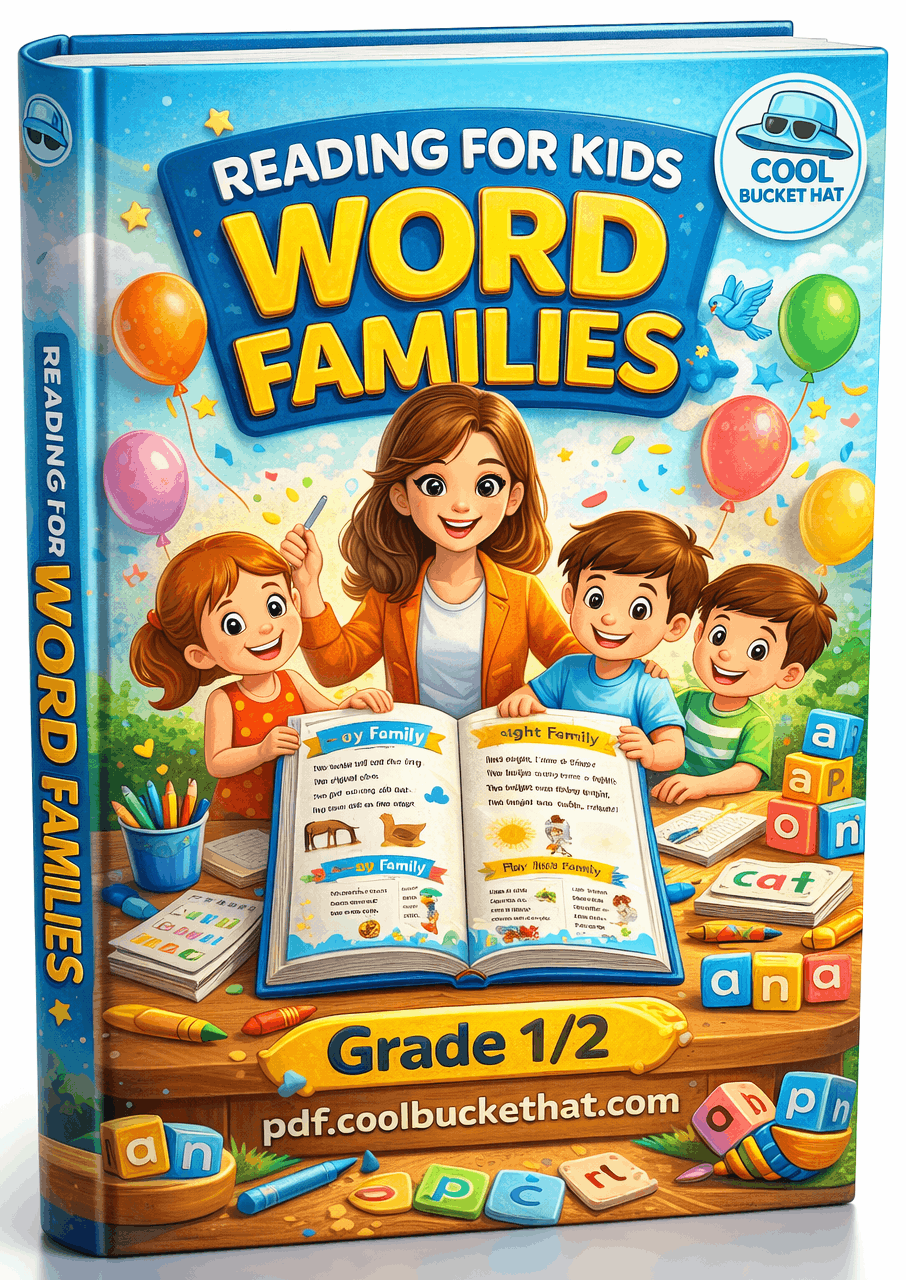
Reading for Kids Words Family is an important step in early literacy development. Word families help children recognize patterns in words, which makes reading easier and faster. Instead of sounding out every word from the beginning, children learn to identify familiar endings such as -at, -an, or -ig. This pattern recognition builds confidence and fluency.
When children understand word families, they can read many words by changing just the first letter. For example, once a child knows the word cat, they can quickly read bat, hat, and mat. This strategy reduces frustration and increases reading success.
In this guide, we will explore what word families are, why they matter, and how to teach them effectively.
What Are Word Families?
Word families are groups of words that share the same ending sound and spelling pattern. These patterns are often called “rimes.”
For example:
-at family: cat, bat, hat, mat, rat
-an family: man, pan, can, fan
-ig family: pig, wig, dig, big
-op family: hop, top, mop, pop
-et family: pet, net, jet, wet
By learning one word family, children can read many related words.
Why Word Families Are Important
Word families help children:
Pattern-based reading is faster than sounding out each letter every time. As a result, children become smoother readers.
How Word Families Support Early Reading
Word families are closely connected to CVC (consonant-vowel-consonant) words. Most beginner word families follow the CVC pattern.
For example:
c + at → cat
b + at → bat
m + at → mat
Children only change the beginning consonant sound. The ending remains the same. This repetition builds strong memory connections.
Fun Activities for Teaching Word Families
Interactive activities make learning easier and more enjoyable.
1. Word Family Charts
Create a chart for one word family at a time.
Example for -at:
cat
bat
hat
mat
rat
Reading the list aloud improves fluency.
2. Word Building with Letter Cards
Use letter cards to build words.
Place “-at” on the table and change the first letter:
b + at → bat
h + at → hat
This visual approach strengthens understanding.
3. Word Family Sorting
Mix different word family words together. Ask children to sort them into groups.
Example:
cat, pig, hat, dog, wig, mat
Group them into -at and -ig families.
4. Fill-in-the-Blank Sentences
Use simple sentences:
The ___ is on the mat.
(Illustration of a cat)
This connects reading to meaning.
Sample Word Family Story
Here is a simple story using the -an family:
The Big Man
The man has a pan.
The pan is big.
The man can fan the pan.
The man is glad.
This short story reinforces the -an pattern while building comprehension.
Benefits of Word Family Practice
Regular practice with word families helps children:
Success with small word groups leads to greater reading confidence.
Teaching Tips for Parents and Teachers
To support learning effectively:
Teach one word family at a time
Use repetition and daily review
Encourage blending instead of guessing
Praise effort and progress
Keep sessions short and focused
Ten to fifteen minutes of daily practice is often enough.
Common Challenges and Solutions
Some children may struggle with similar sounds.
Mixing Vowel Sounds
Focus on one vowel family before moving to another.
Guessing Words
Encourage careful sounding out of the first letter.
Reading Too Quickly
Remind children to read clearly and smoothly.
Patience and repetition help overcome these issues.
Moving to the Next Level
After mastering simple word families, children are ready for:
Strong word family knowledge prepares children for advanced reading patterns.
Final Thoughts
Reading for Kids Words Family is a powerful method for building early literacy skills. Word families simplify reading by teaching children to recognize patterns rather than memorize isolated words.
Through repetition, fun activities, and short stories, children develop confidence and independence. With consistent support from parents and teachers, word family practice can turn beginning readers into fluent learners.
Small patterns create big progress. When children understand word families, reading becomes easier, smoother, and more enjoyable.