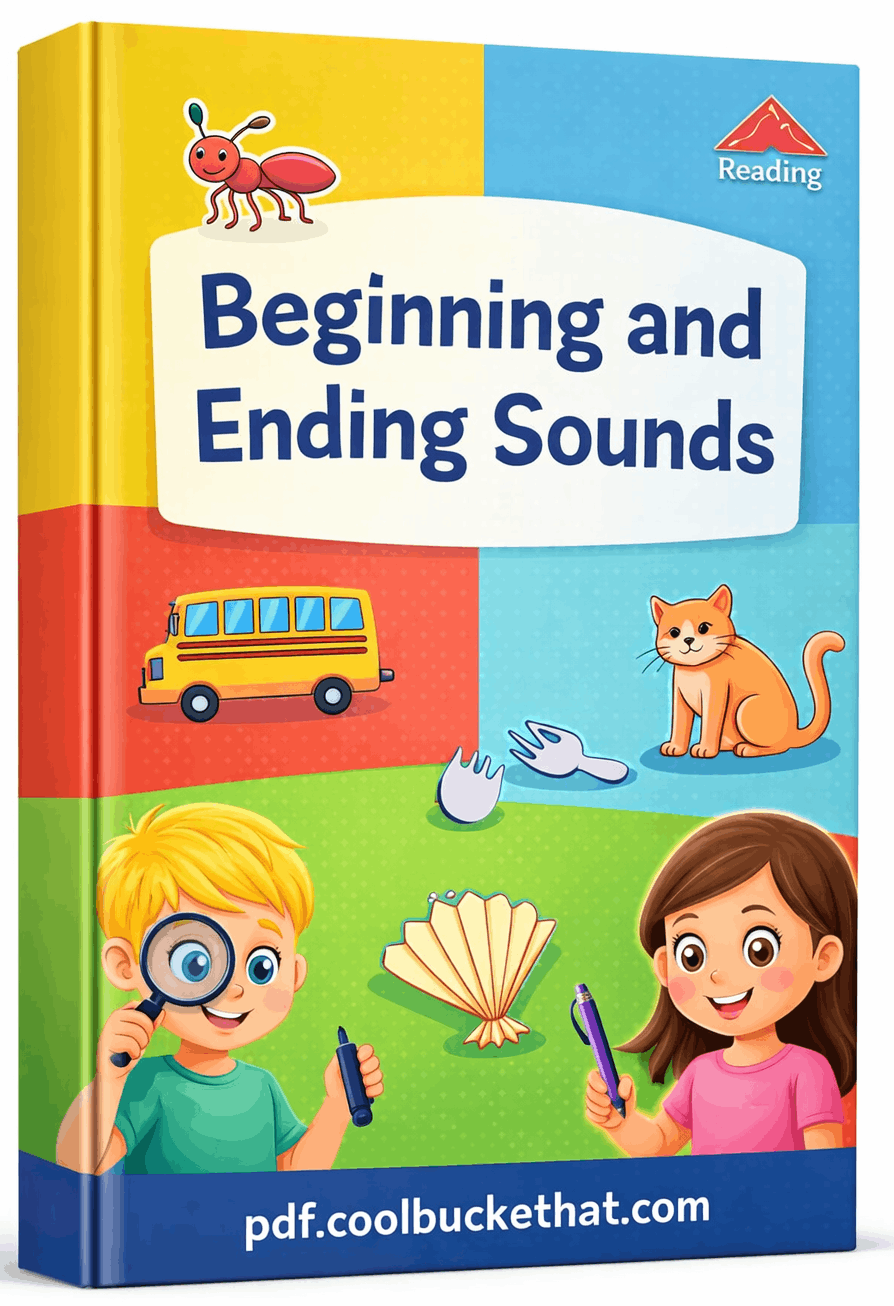
Beginning and Ending Sounds for Early Readers
Beginning and Ending Sounds are essential building blocks in early phonics learning. When children learn to identify the first and last sounds in words, they develop stronger reading and spelling skills. These skills help them decode new words confidently.
Understanding beginning and ending sounds is one of the first steps in learning how words work. In this guide, you will learn why these sounds are important, how to teach them, and simple activities to practice at home or in the classroom.
What Are Beginning Sounds?
Beginning sounds are the first sounds you hear in a word.
For example:
Cat → /k/ sound
Dog → /d/ sound
Ball → /b/ sound
Sun → /s/ sound
When children can hear and say the first sound clearly, they are ready to match it with the correct letter.
What Are Ending Sounds?
Ending sounds are the last sounds you hear in a word.
For example:
Cat → /t/ sound
Dog → /g/ sound
Cup → /p/ sound
Bus → /s/ sound
Ending sounds help children spell words correctly. They also improve reading accuracy.
Why Beginning and Ending Sounds Matter
Learning Beginning and Ending Sounds helps children:
Improve phonemic awareness
Develop strong reading skills
Spell simple words correctly
Recognize word patterns
Build confidence in phonics
Phonemic awareness is the ability to hear and identify sounds in words. This skill is the foundation of reading success.
Teaching Beginning Sounds
Start with simple and familiar words. Use objects or pictures to make learning visual and fun.
Step 1: Say the Word Slowly
Example: Cat
Stretch it: ccc–at
Ask: What sound do you hear first?
Answer: /k/
Step 2: Match the Sound to the Letter
Show the letter C and connect it to the sound.
Teaching Ending Sounds
Ending sounds require careful listening.
Step 1: Say the Word Slowly
Example: Dog
Stretch it: do–ggg
Ask: What sound do you hear at the end?
Answer: /g/
Step 2: Practice Writing the Final Letter
Encourage children to write the letter that matches the sound.
Simple Practice Examples
Here are easy words for beginners:
Beginning Sounds Practice
Apple → A
Ball → B
Fish → F
Sun → S
Tree → T
Ask children to circle the correct beginning letter.
Ending Sounds Practice
Hat → T
Cup → P
Dog → G
Bus → S
Bed → D
Ask children to fill in the missing last letter.
Example:
Ca_ → Cat
Do_ → Dog
Fun Activities for Sound Practice
Learning should be interactive and enjoyable.
1. Sound Sorting Game
Prepare picture cards.
Children sort them by beginning sound.
Example:
B group → Ball, Bag, Bat
C group → Cat, Car, Cup
2. Sound Hunt
Ask children to find objects around the room.
Find something that starts with:
This builds listening skills.
3. Clap the Ending Sound
Say a word and ask children to clap when they hear the last sound.
Example:
“Sun” → clap on /n/
4. Missing Letter Game
Write words with missing beginning or ending letters.
_ at → Cat
Do _ → Dog
_ un → Sun
Children complete the word.
Daily Practice Routine
Short daily practice is more effective than long lessons.
10–15 Minute Plan:
5 minutes – Review beginning sounds
5 minutes – Practice ending sounds
5 minutes – Play a sound game
Consistency improves memory and confidence.
Common Challenges
Some children confuse similar sounds, such as:
To help:
Speak slowly and clearly
Repeat words
Use visual letter cards
Practice regularly
Patience and repetition are important.
Moving to Blending Sounds
After mastering Beginning and Ending Sounds, children can move to blending full words.
Example:
C – A – T → Cat
D – O – G → Dog
Blending connects all sounds together and builds reading fluency.
Final Thoughts
Learning Beginning and Ending Sounds is a key step in early reading development. When children can hear and identify these sounds, they become stronger readers and spellers.
Keep lessons simple, short, and fun. Use games, pictures, and repetition to reinforce learning. With daily practice and encouragement, children will build strong phonics foundations and grow into confident readers.