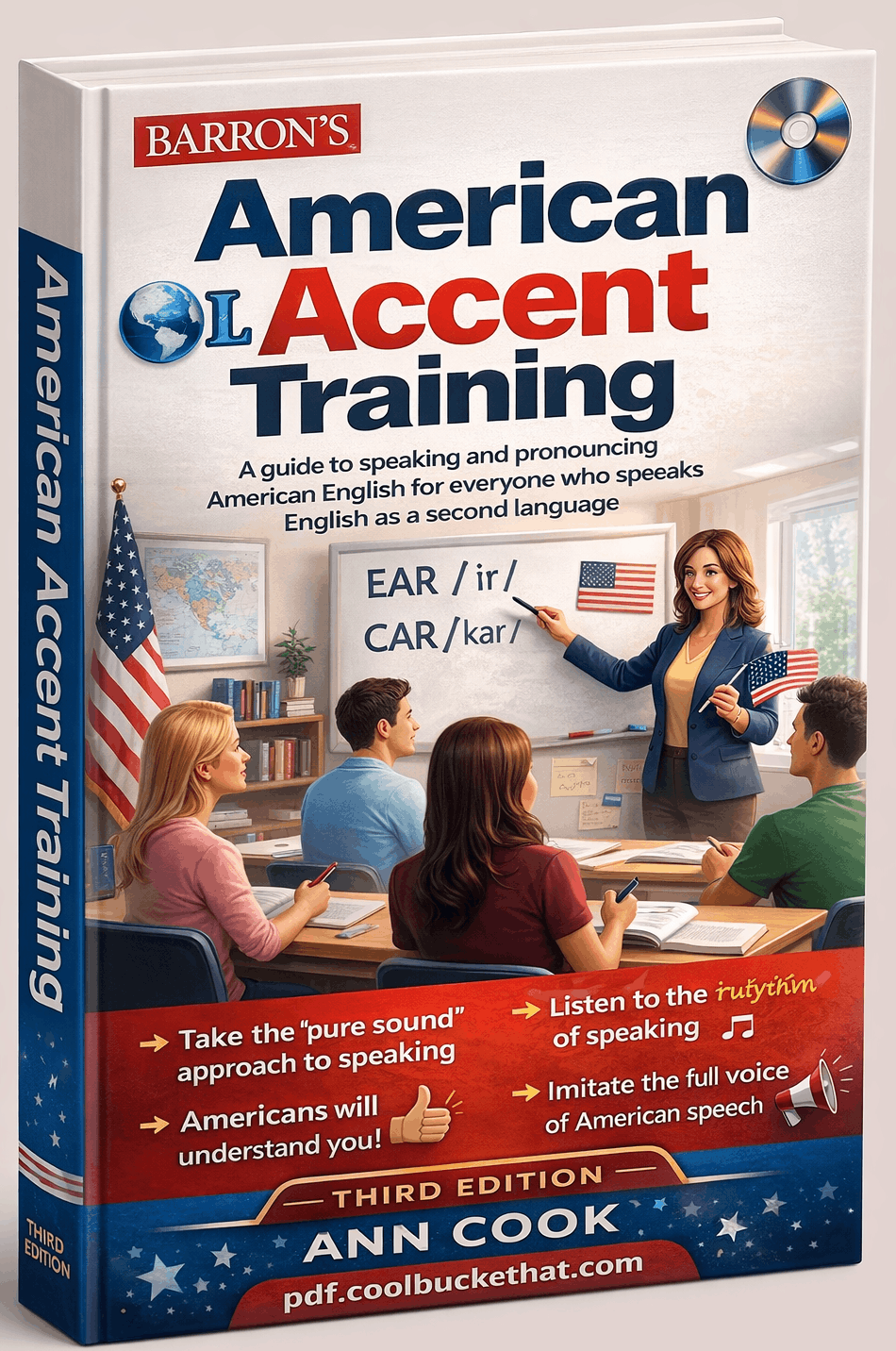
American Accent Training: Speak Clear and Confident English
AMERICAN ACCENT TRAINING is one of the most effective ways to improve your pronunciation, confidence, and overall fluency in English. Many learners already understand grammar and vocabulary. However, they still feel misunderstood when speaking. In most cases, the problem is not language knowledge. Instead, it is pronunciation, rhythm, and stress.
The American accent has specific sound patterns, intonation rules, and connected speech features. When you understand and practice these patterns consistently, your speech becomes clearer and more natural. In this guide, you will learn practical strategies to improve your American pronunciation step by step.
Why American Accent Training Matters
Clear pronunciation improves communication. Even if your grammar is correct, unclear pronunciation can cause confusion.
American accent training helps you:
Speak more confidently
Improve listening comprehension
Reduce misunderstandings
Sound more natural in conversations
Increase professional credibility
Accent training does not mean losing your identity. Instead, it means improving clarity and communication.
Understanding the Key Features of the American Accent
To improve your accent, you must first understand what makes it unique.
1. The American “R” Sound
The American “R” is strong and pronounced clearly. It is not silent like in some British accents.
Examples:
Practice curling your tongue slightly backward without touching the roof of your mouth.
Incorrect (silent R):
Correct (American R):
This sound appears frequently in American English.
2. The Flap “T” Sound
In American English, the letter “T” often sounds like a soft “D” between vowels.
Examples:
Water → “Wader”
Better → “Beder”
City → “Cidy”
This feature makes American speech sound smooth and connected.
Practice by relaxing your tongue and tapping it lightly behind your teeth.
3. Word Stress and Sentence Stress
American English is stress-timed. This means stressed syllables are pronounced clearly, while unstressed syllables are reduced.
Example:
PHO-to-graph
pho-TO-gra-phy
Notice how stress changes pronunciation.
In sentences:
I WANT to go.
She DIDN’T say that.
Stressed words are louder and longer. Unstressed words are softer and faster.
4. Reduced Sounds and Schwa (ə)
The schwa sound (ə) is very common in American English. It is a relaxed, neutral vowel sound.
Examples:
About → “uh-bout”
Support → “suh-port”
Problem → “pro-bləm”
Mastering the schwa makes your speech sound more natural and less robotic.
Connected Speech in American English
Native speakers connect words smoothly.
Example:
While you should use these forms carefully in formal settings, understanding them improves listening and natural speaking.
Practical American Accent Training Exercises
Improvement requires consistent practice. Here are effective exercises.
1. Shadowing Technique
Listen to short audio clips by native speakers. Immediately repeat what you hear. Try to copy:
Pronunciation
Rhythm
Intonation
Speed
This method trains your ear and mouth together.
Practice daily for 10–15 minutes.
2. Record Yourself
Record your voice while reading short paragraphs. Then compare your pronunciation with a native speaker’s version.
Ask yourself:
Self-awareness accelerates improvement.
3. Minimal Pair Practice
Minimal pairs help you hear small sound differences.
Examples:
Ship / Sheep
Live / Leave
Hat / Hot
Practice these pairs to improve vowel clarity.
4. Practice Intonation Patterns
American English uses rising and falling tones.
Correct intonation improves natural flow.
Common Mistakes in American Accent Training
Many learners focus only on individual sounds. However, accent improvement requires more than that.
Avoid these mistakes:
Speaking word by word without rhythm
Ignoring stress patterns
Avoiding speaking practice
Expecting instant results
Accent training is a gradual process.
Daily Practice Plan
Consistency matters more than intensity.
Morning:
Afternoon:
Evening:
Within a few months, noticeable improvement will occur.
Building Confidence While Training
Confidence grows with repetition. Do not wait for perfect pronunciation before speaking. Communication matters more than perfection.
Small improvements each day create long-term success.
Remember:
Clarity is more important than imitation.
Practice reduces anxiety.
Mistakes are part of learning.
Final Thoughts
AMERICAN ACCENT TRAINING is a powerful step toward clearer, more confident communication. By focusing on key sounds like the American “R,” mastering stress patterns, practicing connected speech, and training daily, you can significantly improve your pronunciation.
Accent improvement does not happen overnight. However, with patience and consistent effort, your speech will become smoother and more natural.
Keep listening. Keep practicing. Keep speaking. Over time, your American accent will feel comfortable and confident.