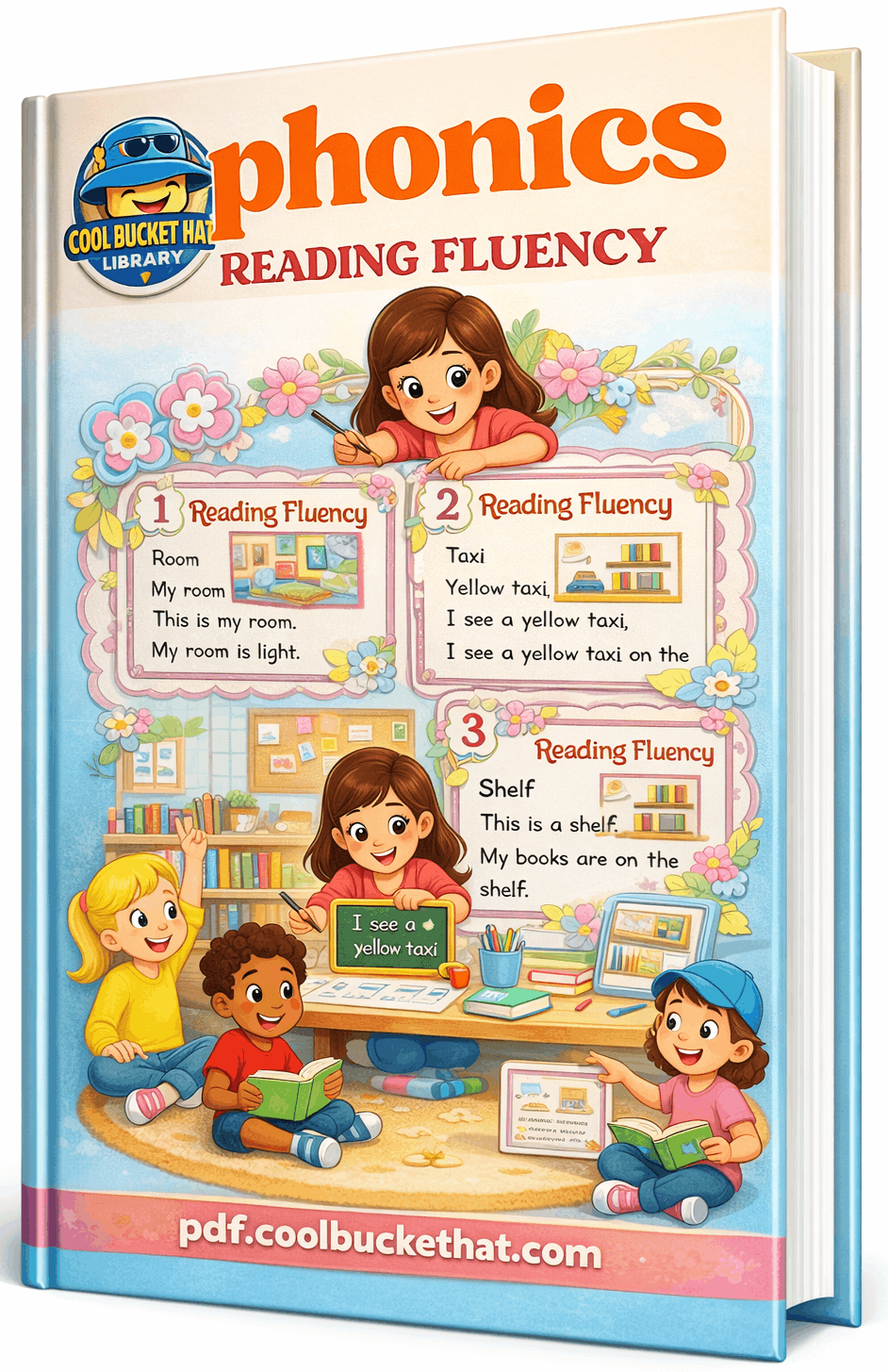
Phonics READING FLUENCY for Strong Literacy Skills
Phonics READING FLUENCY is one of the most important foundations in early literacy development. When children learn how letters connect to sounds and then practice reading smoothly, their confidence grows quickly. While phonics teaches decoding, fluency ensures that reading becomes natural and meaningful. Together, they create skilled and independent readers.
Many young learners can sound out words correctly. However, if reading is slow and choppy, comprehension may suffer. This is why phonics instruction must be connected to fluency practice. When decoding becomes automatic, attention shifts from sounding out words to understanding the text.
In this article, you will discover how phonics supports fluency, why both skills matter, and how parents and teachers can strengthen reading development effectively.
Understanding Phonics and Fluency
Phonics focuses on the relationship between letters and sounds. Children learn individual letter sounds first. Then, they blend those sounds to form words. This process builds decoding skills.
Fluency, on the other hand, refers to the ability to read accurately, smoothly, and with proper expression. A fluent reader:
Without phonics, decoding becomes difficult. Without fluency, reading feels mechanical. Therefore, both skills must develop together.
Why Fluency Matters in Reading
Fluency directly affects comprehension. When children read slowly and struggle with decoding, they focus mainly on pronouncing words. As a result, understanding may be limited.
However, when reading flows smoothly, the brain can focus on meaning. Stories become enjoyable. Information becomes easier to retain.
Fluent reading supports:
Better comprehension
Stronger vocabulary growth
Improved academic performance
Greater reading confidence
Students who read fluently are more likely to enjoy books. Enjoyment encourages practice, and practice leads to improvement.
How Phonics Builds the Foundation
Phonics provides the structure needed for fluency development. Before reading can become smooth, decoding must be accurate.
Early phonics lessons typically include:
Letter sound recognition
Blending CVC words
Learning digraphs (sh, ch, th)
Understanding vowel patterns
When these skills are practiced consistently, recognition becomes automatic. Automatic recognition is the first step toward fluency.
Phonics READING FLUENCY develops naturally when decoding skills are reinforced through repeated reading.
The Role of Repeated Reading
Repeated reading is one of the most effective fluency strategies. A short passage is read multiple times during a session or week.
The first reading may feel slow. However, with repetition:
This gradual improvement builds confidence.
Teachers and parents can track progress by observing smoother reading with each repetition. Small improvements should be celebrated.
Practical Strategies to Improve Fluency
1. Guided Oral Reading
Adults can model fluent reading first. Children listen carefully to pacing and expression. Then, they read the same passage aloud.
This modeling process helps students understand what fluent reading sounds like.
2. Echo Reading
In echo reading, a teacher reads one sentence. The child repeats it immediately. This method reinforces proper phrasing and tone.
3. Partner Reading
Students can read in pairs. One reads while the other listens and follows along. Then roles are switched.
This strategy builds confidence and accountability.
4. Timed Reading Practice
Short one-minute reading sessions can be used to measure progress. Words read correctly are counted. Over time, improvement becomes visible.
Connecting Fluency to Comprehension
Fluency and comprehension are closely linked. When decoding becomes automatic, mental energy is freed for understanding.
After reading a passage, simple questions should be asked:
Discussion strengthens comprehension while reinforcing fluency practice.
Balanced instruction ensures that reading does not become purely mechanical.
Classroom Benefits of Fluency Instruction
In classrooms, structured fluency practice creates noticeable improvement.
Small Group Sessions
Struggling readers can receive focused support. Short passages tailored to their level can be practiced repeatedly.
Fluency Centers
Students rotate through reading stations. Activities may include whisper reading, partner reading, or recording themselves.
Performance Reading
Reader’s theater scripts encourage expressive reading. Students practice dialogue and tone.
These activities make fluency practice engaging rather than repetitive.
Supporting Fluency at Home
Parents can support fluency development easily.
Establish a Daily Reading Routine
Even 15 minutes per day can produce progress. Consistency matters more than length.
Choose Appropriate Texts
Books should match the child’s reading level. Texts that are too difficult may cause frustration.
Encourage Expression
Ask children to read with feeling. Excited sentences should sound excited. Questions should sound curious.
Positive reinforcement builds motivation.
Common Challenges in Fluency Development
Some children may read accurately but lack expression. In this case, modeling is helpful. Adults can demonstrate expressive reading clearly.
Others may read too quickly and make errors. Slowing down and focusing on accuracy can correct this issue.
If decoding remains difficult, additional phonics review may be necessary. Fluency cannot develop without strong decoding skills.
Patience and consistency are essential.
Long-Term Academic Benefits
Strong fluency skills influence performance across all subjects. Reading is required in math, science, and social studies.
Students who read smoothly can focus on content rather than decoding. Academic confidence increases.
Furthermore, fluent readers often become better writers. They understand sentence rhythm and structure naturally.
Phonics READING FLUENCY plays a key role in building these long-term academic advantages.
Creating a Positive Learning Environment
Learning should feel safe and encouraging. Mistakes should be viewed as opportunities for growth.
Praise effort regularly. Improvement may happen gradually, but progress should always be recognized.
Short and consistent sessions prevent burnout. Variety keeps motivation strong.
Reading should remain enjoyable.
Why Phonics READING FLUENCY Is Essential
Phonics READING FLUENCY connects decoding and comprehension seamlessly. It ensures that reading is not only accurate but also smooth and meaningful.
When phonics skills are reinforced through repeated practice, automatic word recognition develops. This automaticity leads to confidence.
Structured lessons, engaging activities, and consistent practice create strong readers.
Fluency transforms reading from effortful to enjoyable.
Final Thoughts
Phonics READING FLUENCY is a crucial step in literacy development. Decoding skills provide the foundation, and fluency builds upon it. When children read accurately, smoothly, and with expression, comprehension improves naturally.
Consistent phonics instruction, repeated reading practice, and supportive guidance work together to create confident readers. Over time, reading becomes effortless and enjoyable.
Strong literacy skills open doors to academic success and lifelong learning. With patience, encouragement, and structured practice, every child can achieve reading fluency.
When phonics and fluency are developed together, true reading success is achieved.